

East of Florence’s central squares, Santa Croce is a historic neighbourhood marked by its piazza, basilica and riverside landmarks. The compact, flat old town is practical to explore on foot, by bicycle or by electric kick scooter; Hotel Santa Croce is a two-star option.
- Getting around: The historic centre is described as quite small and flat.
- Santa Croce: Piazza Santa Croce is one of the area's named landmarks.
- Driving: Large parts of the centre are covered by a restricted traffic zone (ZTL).
- Airport connection: Florence Airport is 5 km from the city centre and connected by tram line T2.
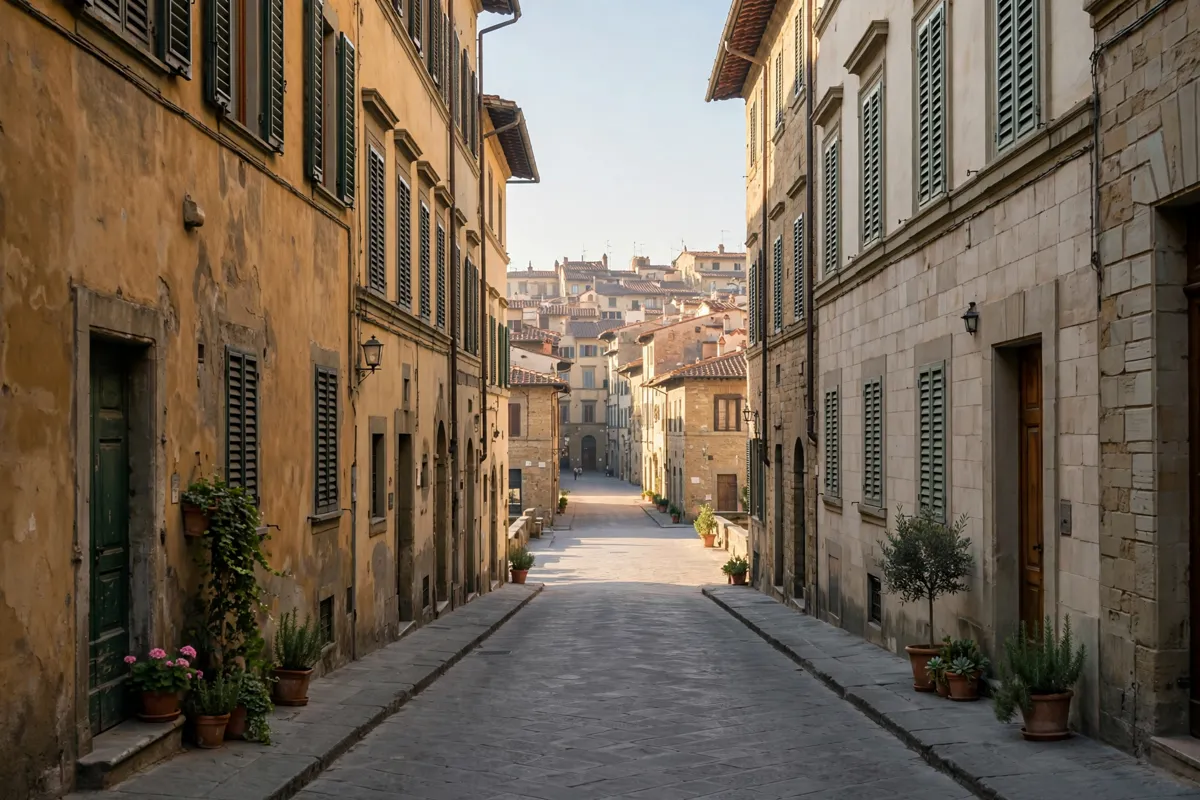
How Florence's historic centre is laid out
Florence's historic centre is small and flat, so walking can link its principal squares and riverside landmarks without requiring a vehicle. Piazza del Duomo, Piazza della Signoria, Piazza Santa Croce and Ponte Vecchio are among the best-known place names for getting your bearings.
Santa Croce sits among the centre's distinct neighbourhood landmarks, including the Basilica di Santa Croce, Museo Horne, Museo Galileo, Le Murate and Mercato di Sant’Ambrogio.
These names help frame the area: the piazza and basilica mark one point of orientation, while the market is another named place in the wider neighbourhood. If browsing is on your route, Florence's markets include Mercato di Sant’Ambrogio.
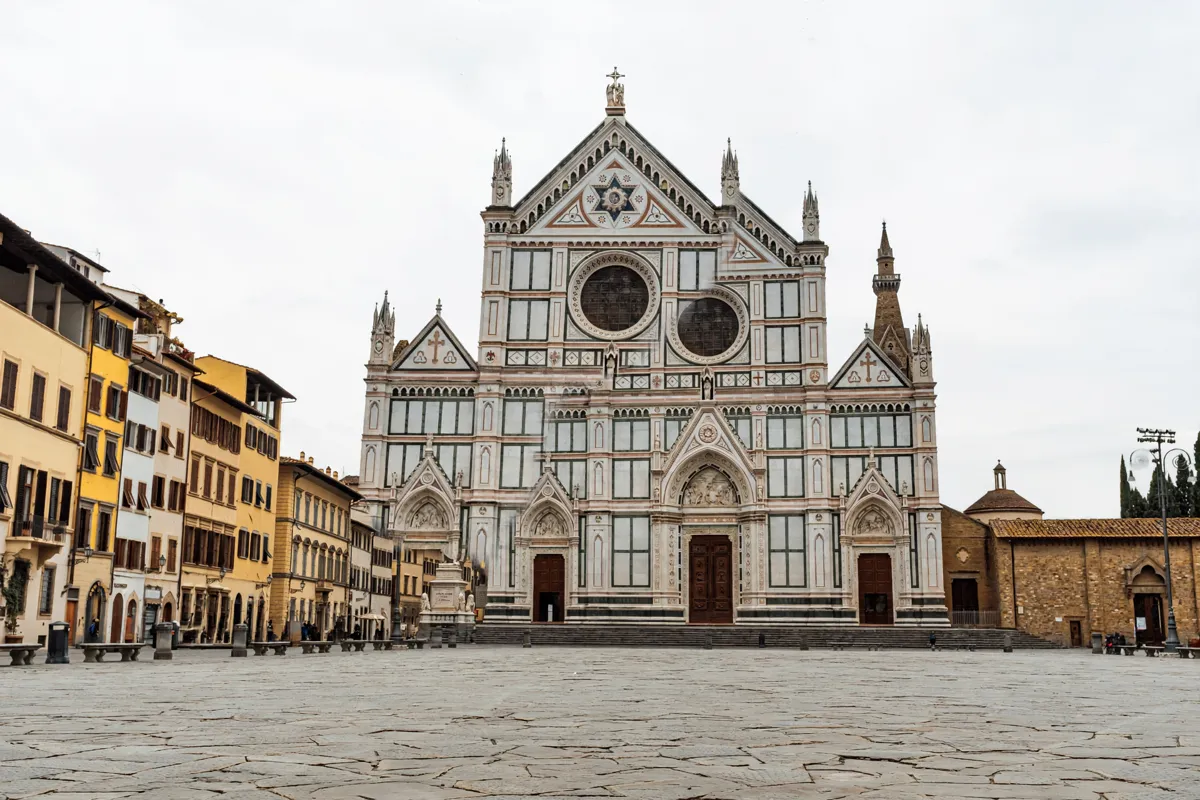
Landmarks around Santa Croce and the Bargello
Piazza Santa Croce and the Bargello are useful landmarks for orienting yourself in this part of the old town. The Basilica di Santa Croce gives the piazza its name, while Palazzo del Bargello is another point of reference. Palazzo dell'Antella, Palazzo Borghese and Loggia del Grano are also part of this area.
These places are easy to group as an area walk rather than treating each as a separate trip. The one-day Florence walking itinerary also starts in this neighbourhood. Keep the names in mind as you move between streets and squares; they also help distinguish this neighbourhood from the Duomo and Signoria areas.
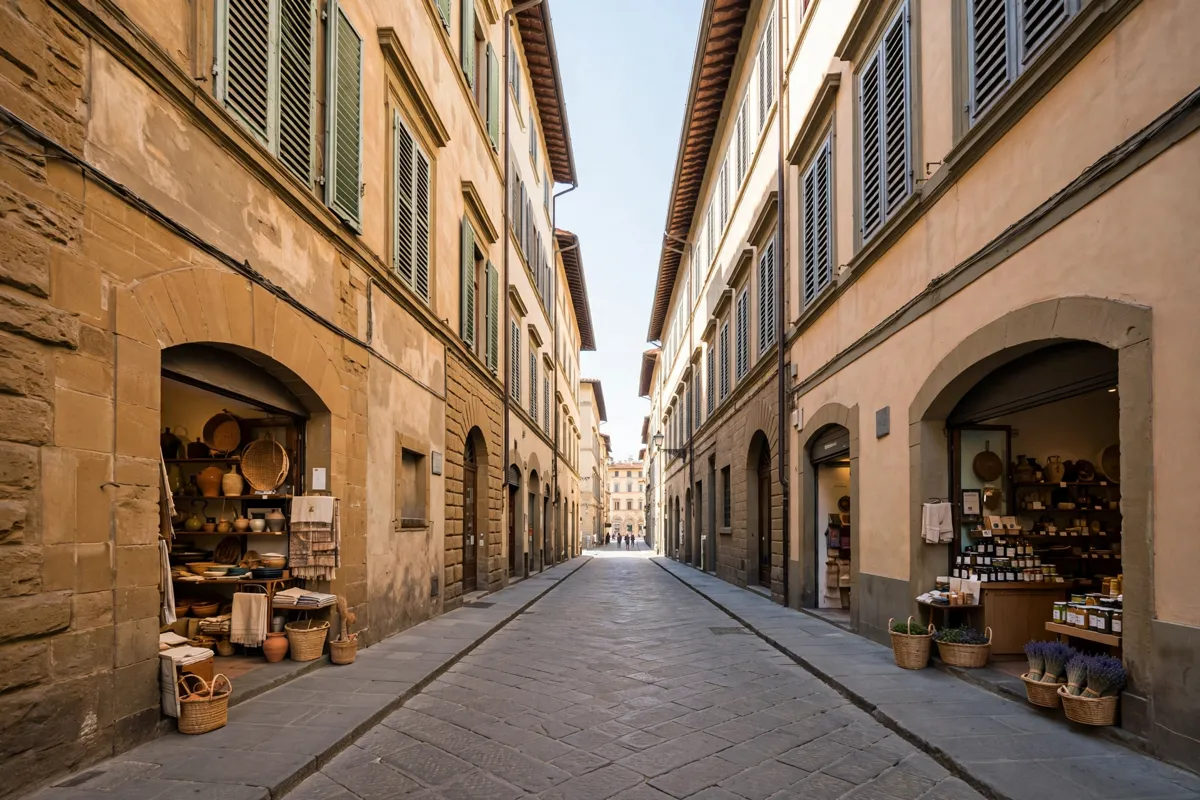
Walking between the Duomo, Signoria and the Arno
Piazza del Duomo, Piazza della Signoria and Ponte Vecchio form three clear reference points for a walk through central Florence. The centre's compact, flat layout supports exploring on foot, with the Arno-side landmark of Ponte Vecchio providing a natural point to include in a route linking the central squares.
To make the walk more structured, choose one of the squares as your starting point and connect the others in sequence. Santa Croce can serve as another area to include before or after the central landmarks. For a separate visit focused on one of Florence's major galleries, the Uffizi Gallery planning guide covers that subject.
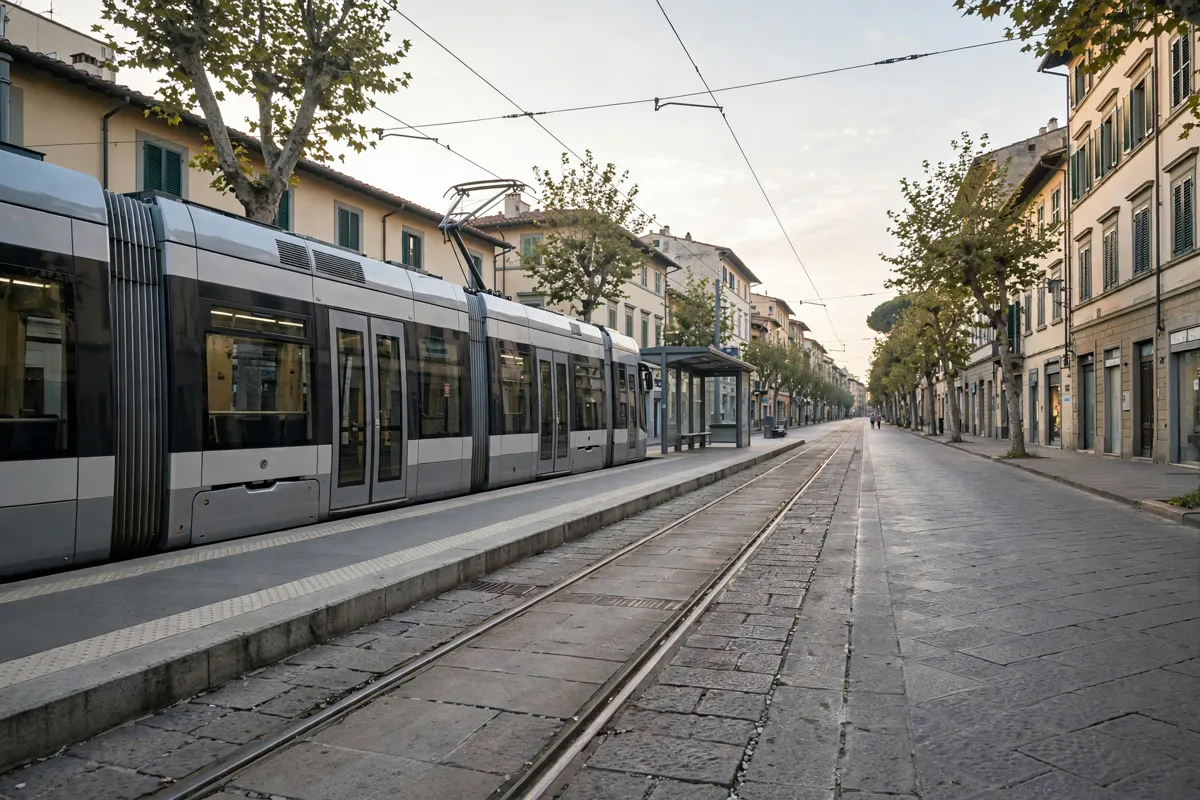
Getting around beyond the old town
Florence's local and intercity buses provide options for journeys beyond the old town; Autolinee Toscane provides line and timetable information. Florence Airport, in Peretola, is 5 km from the city centre and is connected to it by tram line T2.
From Hotel Santa Croce, walk about 3 minutes to Palazzo del Bargello; you can pair the visit with Piazza Santa Croce and the Basilica di Santa Croce.
If you are arriving by car, plan around the ZTL, which covers large parts of the historic centre. Electronic gates read vehicle registration plates, and signs indicate whether entry is permitted. Pedestrian areas and bus lanes are forbidden to private traffic.
Drivers who need to reach accommodation or a garage inside the ZTL must give the facility their vehicle details no later than three hours after entering.
The driver must take the shortest route from the nearest ZTL access point to the destination. Parterre parking, near Piazza Libertà at the edge of the ZTL, is connected to the historic centre by shuttle bus line C1.
Useful planning notes for a central stay
The ZTL has daytime restrictions in sectors A, B and O from Monday to Friday, 7:30 a.m. to 8:00 p.m., and on Saturday from 7:30 a.m. to 4:00 p.m.; it is inactive on Sundays and public holidays.
During the summer nighttime period, from the first Thursday in April to the first Sunday in October, sectors A, B and O have restrictions on Thursday, Friday and Saturday nights. Sectors F and G have summer nighttime restrictions on Thursday, Friday and Saturday from 11:00 p.m. to 3:00 a.m.
Because access rules and transport details can change, check the official site before you go. FeelFlorence provides information on the ZTL, while Autolinee Toscane covers bus lines and timetables. FeelFlorence also provides itineraries and a map with information for wheelchair users; its Kimap app gives real-time road-surface information for people with motor disabilities.
FAQs
Is Florence old town easy to explore on foot?
FeelFlorence describes the historic centre as quite small and flat, and says it is possible to get around on foot, by bicycle or by electric kick scooter.
Does Florence old town have a restricted traffic zone?
Yes. The ZTL covers large parts of the historic centre, and electronic gates read vehicle registration plates. Follow the signs and check the access rules before driving in.
How is Florence Airport connected to the city centre?
Florence Airport is connected to the city centre by tram line T2.